
How to Learn Without a Teacher - and Finally Stop Quitting Halfway
June 24, 2026
Today's learners are drowning in content and starving for guidance.
The internet has more educational material than every university library combined. 70% of self-learners still quit before finishing what they started - not because of the content, but because of what's missing around it.
The missing piece isn't another course, another app, or more motivation. It's a companion. Something that knows where you are, builds the path forward, and is there when you get stuck.
That's the problem Curo was built to solve. But first, let's be honest about exactly what's breaking down.
Too Many Learning Resources? Here's Why You Still Don't Know Where to Start
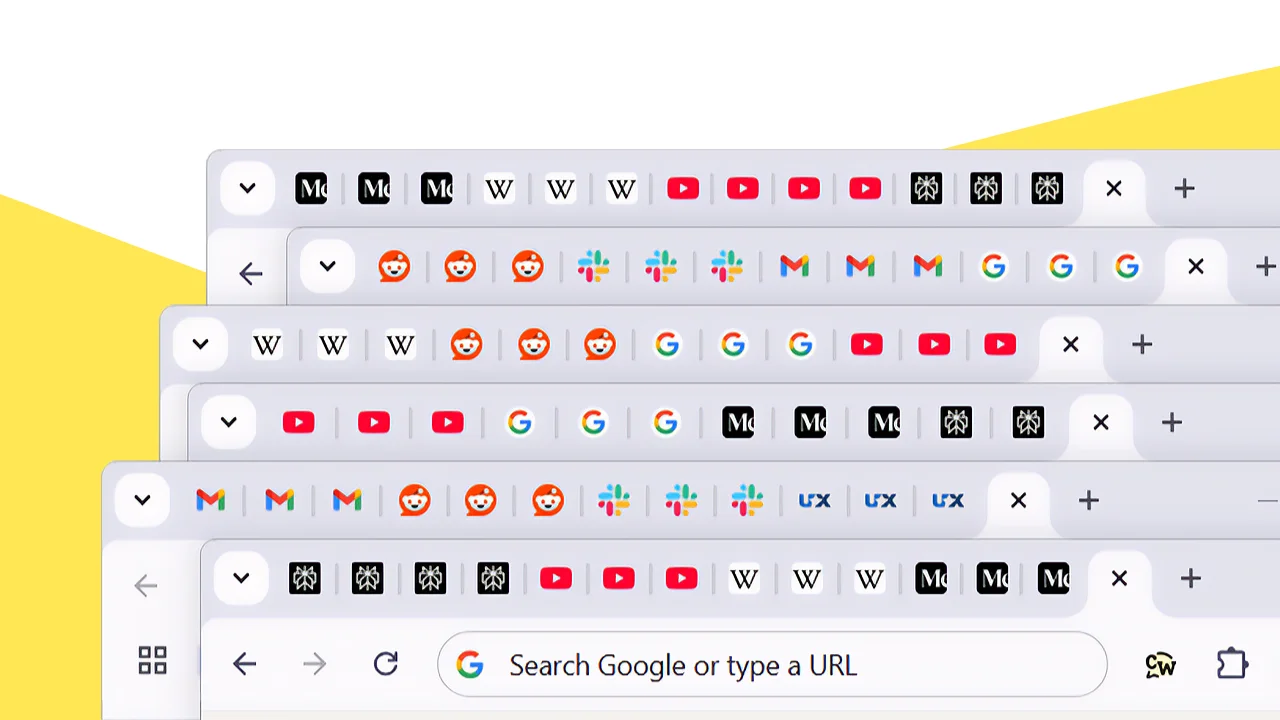
Open Google and search "how to learn data science." You get 800 million results. Six competing roadmaps. Four Reddit arguments. Three Coursera ads. A Medium post from 2019 referencing tools that no longer exist.
Ninety minutes later, you've added a course to your wishlist, opened twelve browser tabs, and learned absolutely nothing.
This is information overload - one of the most documented obstacles in self-directed learning. A 2021 study in Educational Psychology Review found that learners exposed to high volumes of unstructured content experienced significantly higher cognitive load, lower retention, and reduced motivation compared to those given a structured path. The information wasn't the problem. The absence of structure was.
The internet was built to surface information, not to teach. It has no model of what you know, no awareness of your goal, no way to tell you what to learn first or what to do when you're confused. It gives you options - and leaves the rest entirely to you.
What you actually need isn't more content. You need something that can turn any content into a structured learning experience built around you.
Why ChatGPT Is Not a Learning Tool - and What Self-Learners Actually Need
You've felt this: you ask ChatGPT a question, get a brilliant clear explanation, feel like you understood it, close the tab. A week later, it's gone.
That's not your fault. It's a structural limitation of what ChatGPT is.
ChatGPT is a general-purpose language model that responds to what you ask, in the moment you ask it. That makes it extraordinary for on-demand answers. It makes it poorly suited for real learning - for four specific reasons:
No memory across sessions. Every conversation starts from zero. ChatGPT doesn't know what you understood yesterday or what you've been building toward. Learning is cumulative. ChatGPT is not.
No curriculum. It only knows what you ask about. If you don't know what to ask - which is almost always the case when you're genuinely new to something - it can't guide you.
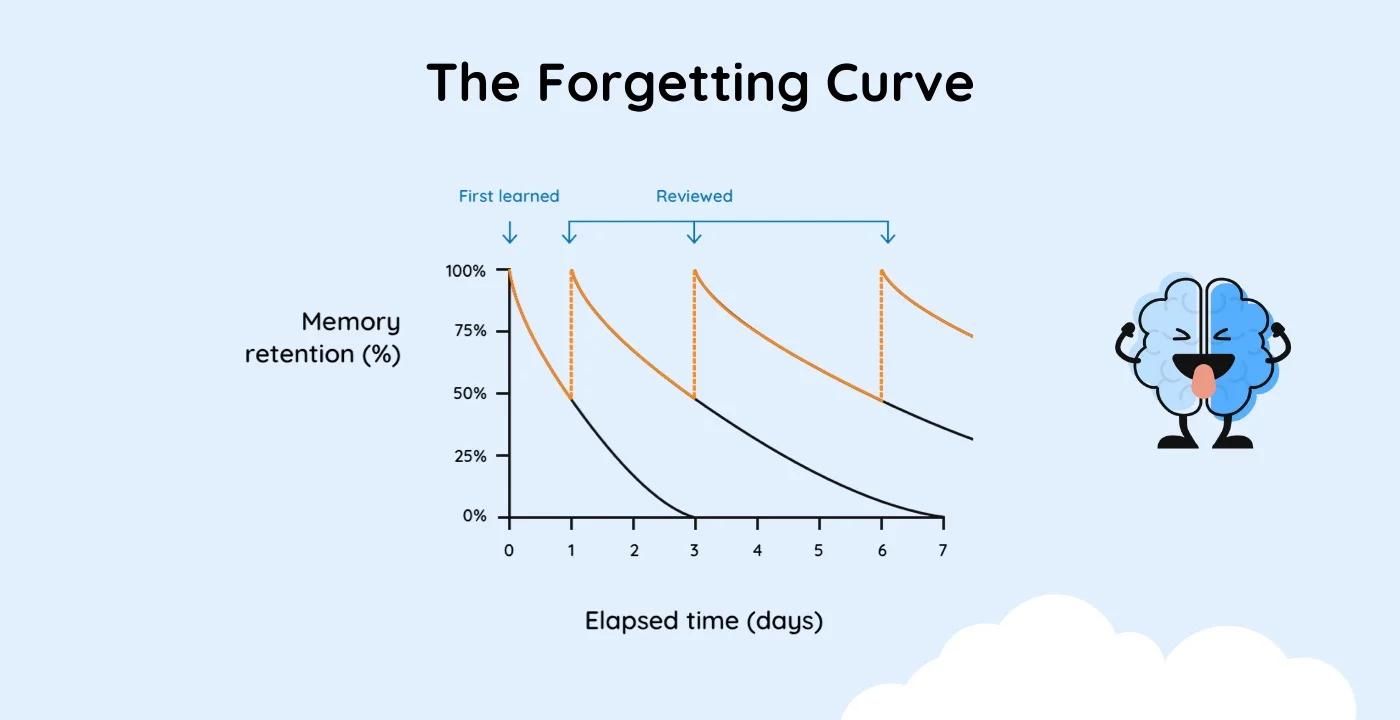
No retention mechanism. The Ebbinghaus forgetting curve - replicated by Murre & Dros in PLOS ONE (2015) - shows that 67% of new information is forgotten within 24 hours without active reinforcement. ChatGPT provides none.
No progress tracking. There is no model of what you've mastered versus what you've only glanced at. No signal that you're ready to move forward. No awareness of what needs revisiting.
A 2025 randomised controlled trial in Scientific Reports found that AI systems designed specifically for teaching outperformed traditional active learning in both knowledge retention and time-to-mastery. The determining factor wasn't intelligence. It was design: built for learning, not conversation.
ChatGPT answers questions. A learning companion teaches. For a self-learner, that distinction is everything.
What Happens When You Get Stuck Learning Online With No One to Help

This is where most self-learning actually ends. Not with a decision to quit - with a slow drift.
You're making progress. Then you hit a genuine conceptual block. Why does this work this way? How does this connect to what I was learning before? You search Google and get threads that assume knowledge you don't have. You ask ChatGPT and get an answer that technically responds to your question but doesn't resolve why you were confused. You're not sure if you understood it - or just decided to move on.
Progress slows. Sessions get shorter. The gap between sessions grows.
Research identifies this pattern precisely. A study at Charles Darwin University found that falling behind, mental fatigue, and lack of structure account for 65% of the reasons online learners drop out - not difficulty of the material. In a classroom, a teacher notices confusion before you voice it. In a bootcamp, someone is there for exactly these moments. As a self-learner, your options when stuck are a search engine that gives you noise, a chat AI that gives reactive answers, or paying $50–$200 an hour for a tutor.
The pattern is consistent and documented:
No guidance when stuck → Slow progress → Fading motivation → Quit halfway - or pay heavily to continue.
We call this the guidance gap: the absence of structured, personalised support between a self-learner and their goal. It's the gap that courses don't fill, search engines can't fill, and chat AI wasn't designed to fill.
Curo was built to close it.
What a Proactive AI Learning Companion Does Differently
Curo is not a course library. It is not a search engine. It is not ChatGPT. It is a proactive AI-powered learning companion - one that structures your path, teaches you step by step, and stays with you when you get stuck. (Try how Curo works →)
Against content overload: Curo starts with your goal, your current level, and how you learn - then builds a structured path before your first session. And uniquely: Curo can take any content you bring - a URL, an article, a document - and transform it into a structured, whiteboard-style, interactive learning experience tailored to you. The open internet doesn't have to be noise. With Curo, it becomes teaching.
Against reactive AI: Sessions are multimodal - voice, visuals, questions, explanations - paced to how you're absorbing the material. Curo doesn't wait for you to ask the right question. It presents concepts in sequence, checks understanding before moving forward, and adapts when you're confused. Roediger & Karpicke (2006) established that active recall testing produces 80% retention after one week, compared to 34% for passive review - and that mechanism is built into every Curo session.
Against the guidance gap: When you hit a wall, Curo works through it with you. It re-explains from a different angle, asks a question to surface where the confusion lives, and continues only once you've genuinely resolved it. It checks in when momentum slips. It nudges you forward before the drift becomes a stop.
For the first time, having a companion who knows what you know, builds your path, and guides you through the hard parts isn't something that requires a $100-an-hour tutor. Curo makes that kind of personalised guidance available to anyone.
What Learning 15 Minutes a Day Actually Looks Like
Sunday evening. You decide to finally learn Python. You open Curo, tell it your goal (build data confidence before a career move), your level (complete beginner), and your time (15 minutes a day). Within minutes you're in your first session - not a syllabus, not a video playlist. A conversation that teaches, sequenced specifically for you.
Tuesday lunch. Curo picks up where you left off. Midway through variables and data types, you're confused about the difference between a string and an integer. You say so. Curo doesn't move on. It shifts approach, uses an analogy you recognise, asks you a question to confirm understanding, then continues. You move forward having resolved the confusion - not tolerated it.
The following Monday - when you'd normally have drifted. Curo nudges you: you're ready to write your first real function. Not a drill. Actual working code. You open the session.
You're still learning - not because your motivation is stronger this time, but because you have a system designed to keep you going.
Curo vs. ChatGPT, Coursera, and YouTube: An Honest Comparison
| Tool | What it does well | Where it fails self-learners | How Curo is different |
|---|---|---|---|
| Google / YouTube | Free, vast, always current | No path, cognitive overload, no support when stuck | Structures your path - turns any content into teaching |
| ChatGPT / Claude | Clear on-demand answers, patient | Reactive, no curriculum, no memory, no retention | Proactive - teaches in sequence, tracks understanding, guides when stuck |
| Coursera / Udemy | Structured content, credentials | Passive video, 5–15% completion, one-size-fits-all | Adaptive and interactive - adjusts to your level and pace |
| Bootcamps / Tutors | Real guidance, accountability | $2,000–$15,000+, rigid schedules | Always available, fraction of the cost → |
| Duolingo / Flashcard apps | Habit-forming, pattern drilling | Not built for conceptual depth across varied subjects | Conceptual teaching across any topic |
The honest summary: If you need a formal credential, Coursera or a bootcamp serve that purpose well. If you're a product manager, read about Curo for PMs →. If you want to genuinely understand and apply what you're learning - without a teacher, without $10,000, and without losing the thread when it gets hard - Curo is built for exactly that.
Is Curo Right for You?
Right fit if:
- You keep hitting a wall of resources with no clear starting point
- You've tried courses before and drifted - not from lack of interest, but lack of direction
- You get stuck and have no one to help you through it
- You have limited, irregular time and need a system that works with your real schedule
Probably not the right fit if:
- You need a formal, accredited credential for a job application
- You learn best in a live cohort with real-time peer accountability
- You need deep specialist technical implementation on a narrow subject
How to Start Learning Without a Teacher or an Expensive Course
The self-learners who will be most capable in five years aren't the ones who had access to the most content. They're the ones who had guidance - who knew where to start, got through the hard moments instead of around them, and built a habit that kept pace with their ambition.
The guidance gap is real. Closing it doesn't require a classroom or a $200-an-hour tutor anymore. It requires a companion.
Start free at curohq.com → Start with a 7-day free trial—no credit card or setup. Just bring what you want to learn.
Frequently Asked Questions
Why do I keep quitting online courses - and would Curo be different?
Learners quit because of the guidance gap - no structure, no support when stuck, fading motivation - not content quality. Courses deliver content. Curo provides guidance: present when you're confused, adapts when you're struggling, nudges you forward before momentum breaks. That's structural, not cosmetic.
How is Curo different from just using ChatGPT?
ChatGPT answers questions you ask. If you don't know what to ask, it can't guide you. It has no memory across sessions, no curriculum, no retention mechanism. Curo is proactive: builds your path, teaches in sequence, checks understanding, and surfaces concepts at the optimal review interval. The difference between someone who answers questions and someone who teaches you.
I don't know where to start. Can Curo help with that?
That is exactly the problem Curo was built to solve. You tell Curo your goal and your level - it builds the path. You can also bring any content you've already found (article, URL, document) and Curo transforms it into a structured learning experience built around you.
What can I learn with Curo?
Coding, data science, AI, personal finance, product management, philosophy, history, language, career skills - anything. You're not locked to a fixed catalogue. Bring your goal; Curo builds the path.
How much does Curo cost?
Curo starts with a 7-day free trial. After that, Pro Monthly keeps your adaptive learning path, topics, and progress available. See full pricing →
Sources
- Online course dropout rates (70%) - LearnStream MOOC Completion Study (2025); MIT OpenCourseWare completion research.
- MOOC completion rates (5–15%) - Shah, D. (2015). Class Central; LearnStream (2025).
- Top reasons for dropout - Charles Darwin University; Frontiers in Education (2025): doi.org
- Ebbinghaus forgetting curve - Ebbinghaus, H. (1885). Replicated: Murre & Dros (2015). PLOS ONE. doi.org
- Active recall retention (80% vs 34%) - Roediger & Karpicke (2006). Psychological Science, 17(3), 249–255.
- AI tutors outperform ChatGPT-style models - Scientific Reports (2025). doi.org
- Information overload in learning - Educational Psychology Review (2021).
- Global e-learning market - Statista (2025).
Curo is a proactive AI-powered learning companion - democratising personalised learning for everyone. curohq.com `;
const data2 = `seo_title: "How to Learn Without a Teacher - and Finally Stop Quitting Halfway" meta_description: "70% of self-learners quit before finishing. Not from lack of effort - from lack of guidance. Curo is the AI learning companion that structures your path, teaches you, and stays with you when you get stuck. Start a 7-day free trial." slug: "/for/self-learners" author: "The Curo Learning Team - educators, product practitioners, and learning science researchers building adaptive learning for everyone." canonical: "https://curohq.com/for/self-learners" schema: ["Article", "FAQPage"]
How to Learn Without a Teacher - and Finally Stop Quitting Halfway
By the Curo Learning Team
Ready to start learning with Curo?
Curo turns whatever you want to learn into a personalized, guided board - built around what you already know. Free to start.
Related reading
- How Non-Technical Product Managers Can Learn AI - Without Coding, Bootcamps, or Faking It in MeetingsYou don't need to code to work with AI. Non-technical PMs need fluency - not expertise. Here's the 30-day path that actually sticks. Start a 7-day free trial…
- Stop Bookmarking, Start Learning EffectivelyLearn how to stop bookmarking and transform your digital habits into effective learning strategies. Discover methods to retain information better.
- Best AI Podcast Generators for LearningDiscover the best AI podcast generators for learning. Compare features, pricing, and use cases to transform notes and articles into educational audio.
- Curo vs Obsidian: Which PKM Tool is Right for You?Compare Curo vs Obsidian to find the best personal knowledge management (PKM) tool for your needs, covering features, use cases, pricing, and data ownership.
- Curo for Researchers: Staying Ahead in AcademiaDiscover how Curo for researchers helps manage academic literature overload, streamline your research workflow, and stay informed with crucial papers.
- Best Daily Learning App for Busy PeopleFind the best daily learning app to fit your busy schedule. Discover microlearning, habit building, and skill development for lifelong learning.
